
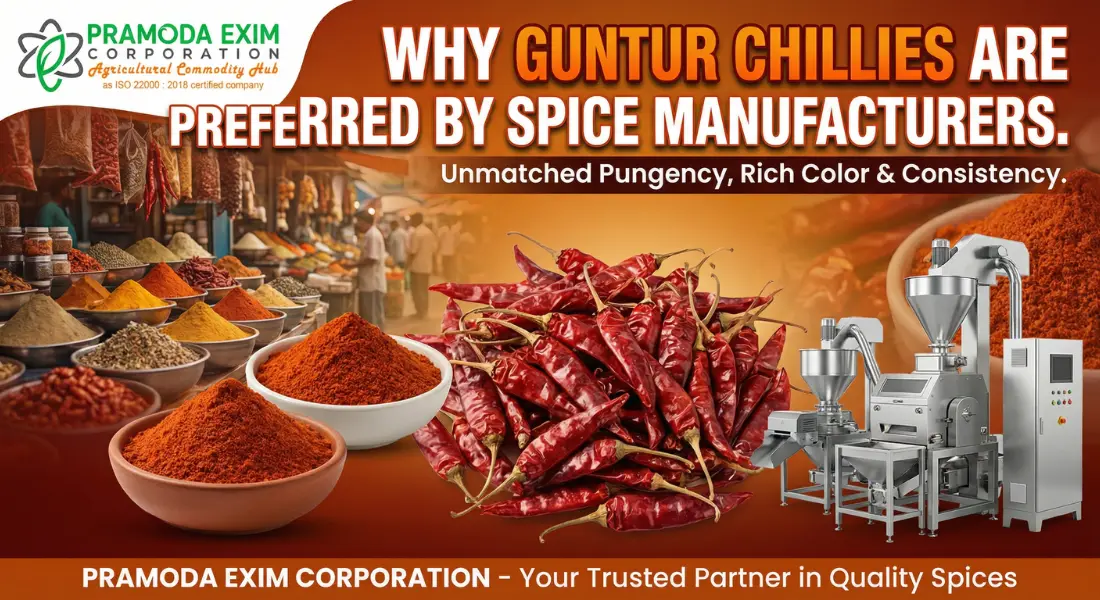
Guntur chillies from Andhra Pradesh pack a fiery punch that spice manufacturers rely on for bold, consistent flavor in powders and blends worldwide. If you’re a manufacturer or home cook curious about this spice powerhouse, rest assured-we’ll walk you through why it’s the top choice, making your sourcing decisions confident and straightforward.
Unique Traits of Guntur Chilli Powder
Grown in Guntur’s sun-drenched black soils, these chillies boast high capsaicin levels (0.226% to 0.7%), delivering intense heat from 18,000-100,000 Scoville Heat Units (SHU)-far spicier than milder varieties like Byadgi. This makes Guntur chilli powder ideal for manufacturers seeking sharp, pungent profiles without compromising depth or fruity undertones.
Sun-dried for natural preservation, it grinds into a deep red powder with rich aroma, perfect for uniform blending in commercial production. Manufacturers love its thick skin and low moisture, ensuring longer shelf life and minimal breakage during processing.
Quality is reassuringly high: Andhra’s climate yields plump pods with consistent potency, reducing batch variations that plague other regions.
Why Spice Manufacturers Choose Guntur Chillies
Spice makers prioritize Guntur for its perfect balance of heat, color, and yield-key for cost-effective, high-volume output. Unlike color-focused Kashmiri types, Guntur excels in spice intensity, making it the go-to for hot sauces, masalas, and exports to fiery cuisine lovers in the US, Europe, and Asia.
High productivity (Guntur produces 45% of India’s chillies) ensures reliable supply chains, vital for manufacturers facing tight deadlines. Its versatility shines in blends like garam masala or pickles, where bold heat elevates without overpowering other spices.
In 2026, with global demand for authentic heat rising, manufacturers report 20-30% preference for Guntur due to its export-grade standards and traceability from farm to factory.
Guntur vs. Other Chilli Varieties
Not all chillies are equal-here’s a clear comparison to guide your choice.
| Variety | Heat Level (SHU) | Primary Use | Manufacturer Preference |
| Guntur | 18,000-100,000 | Spice/heat in powders, curries | High yield, intense capsaicin |
| Kashmiri | 1,000-2,000 | Color in gravies | Mild, aesthetic focus |
| Byadgi | 50,000-100,000 | Blends, color+heat | Less capsaicin than Guntur |
| Teja | 30,000-50,000 | Snacks, snacks | Moderate, less pungent |
Guntur wins for manufacturers needing “heat-first” reliability-decision-ready for scaling production.
Culinary and Industrial Applications
Guntur chilli powder stars in Andhra’s spicy gravies, chutneys, and pickles, but manufacturers amplify its reach.
In Indian Cooking
Essential for gongura pickles, spicy rasams, and Chettinad curries-adds authentic fire that home cooks crave.
Commercial Spice Blends
Forms the base for sambar powder, idli podi, and export masalas; its potency allows smaller quantities for big impact.
Global Fusion
Used in peri-peri sauces, Mexican chili mixes, and BBQ rubs-manufacturers blend it for international heat standards.
Start small: 1/2 tsp transforms dal, building flavor layers effortlessly.
Health Benefits Driving Demand
Capsaicin boosts metabolism, aids weight loss, and fights inflammation, making Guntur powder a health-forward choice for wellness brands. Rich in Vitamin C, beta-carotene, and antioxidants, it supports immunity, digestion, and heart health-reassuring benefits manufacturers highlight on labels.
Anti-inflammatory properties ease joint pain, while improved circulation appeals to functional food lines. These perks position Guntur as a premium, marketable ingredient in 2026’s health-conscious market.
Understanding Red Chilli Price Today (2026)
Red chilli prices hinge on harvests, exports, and global demand-Guntur variants command premiums for quality. As of March 2026, wholesale “red chilli price” for Guntur chillies hovers at INR 150-300 per kg, with powder at INR 200-450 per kg, down 5-8% from 2025 peaks due to strong monsoons.
Factors like capsaicin content and drying methods influence costs; buy during peak season (Oct-Dec) for savings. Manufacturers track live mandi rates via platforms like Guntur Mirchi for smart bulk deals-stable supply keeps pricing predictable.
How Manufacturers Source and Process Guntur Chillies
Sourcing feels complex, but experts simplify it supportively.
- Select Farms: Partner with Guntur district growers for GI-tagged authenticity-ensures 0.5%+ capsaicin.
- Quality Checks: Test SHU, moisture (<10%), and purity; stone-grinding preserves oils.
- Scale Production: High-volume drying and milling suit factories; FSSAI/APEDA certifications boost exports.
- Storage Best Practices: Cool, dry silos prevent mold-extends usability to 12+ months.
Pro tip: Lab-test for aflatoxins-top manufacturers do this for safety and compliance.
Market Trends for 2026
India’s chilli exports surge 15%, with Guntur leading due to demand from spice giants in the US and UAE. Organic Guntur powder grows 25%, as manufacturers pivot to clean-label products.
Automation in Guntur mills cuts costs 10-15%, stabilizing “red chilli price” amid climate shifts. Spice firms like Everest and MDH double Guntur usage for hotter blends.
Simple Recipes to Test Its Power
Fiery Andhra Chicken: Marinate 500g chicken in 2 tsp Guntur chilli powder, yogurt, turmeric; cook with onions. Ready in 40 mins-bold and satisfying.
Mirchi Pickle: Mix chopped chillies, Guntur powder, oil, salt-ferment for tangy heat.
These showcase why manufacturers (and you) can’t resist it.
Regional Insights: Guntur as India’s Spice Capital
Guntur district yields 5 lakh tons yearly, hosting Asia’s largest chilli market. Varieties like 273R (super-hot) dominate manufacturing, with hybrids boosting yields 20%.
Guntur chillies’ fiery reliability makes them spice manufacturers’ trusted ally-intense heat, health perks, and value drive its preference worldwide. Stock up on Guntur chilli powder today; your blends will sizzle with authentic flair. Questions on red chilli price or suppliers? We’re here to support your spice journey reassuringly.